A 20-day countdown has begun to BTS’s first live performance in three years following their hiatus from group activities due to mandatory military service — a concert titled “BTS THE COMEBACK LIVE | ARIRANG” at Gwanghwamun Square in Seoul. This marks the first time an artist has held a solo concert at Gwanghwamun Square — an iconic landmark that symbolizes South Korea.
Regarding the reason for choosing Gwanghwamun Square as the starting point for what is being called the most anticipated global comeback, BigHit Music stated, “Since the word ‘Arirang’ carries symbolic meaning, we prepared the first stage in a space that represents Korea.” The company also revealed that the one-hour performance will not only include the title track and new songs, but BTS will also revisit some of their biggest hits throughout their career.

Earlier, there were reports suggesting that the one-hour duration was due to a request from the Seoul Metropolitan Government to shorten the event. However, on March 1, BigHit Music immediately denied the rumor, stating, “The city of Seoul has never restricted the time,” and explaining that “The duration was decided to ensure a safe and smooth event, considering the unique nature of Gwanghwamun Square being in the heart of downtown Seoul.”
The company added, “We have comprehensively reviewed stage operations, spectator safety, and crowd control, taking into account the special environment of an outdoor public space.”
Among these concerns, safety and crowd control remain the top priorities, receiving particular attention from both the Seoul authorities and local ρσℓι¢є. According to ρσℓι¢є estimates, if the crowd fills the area from Gwanghwamun Square to Daehanmun, attendance could reach approximately 230,000 people. If it expands further to the Sungnyemun area, the number could rise to 260,000.
With such a mαѕѕive gathering, the possibility of criminal activity cannot be ruled out, especially amid online threats suggesting potential вσмвing attempts. As a result, a dedicated monitoring unit under the cyber investigation division has been established to prevent the spread of fake вσмв threats on social media and to closely track any signs of extremist activity in order to respond promptly.
Police have divided the event site into four major zones and 15 smaller sectors for management purposes. Crime prevention and counterterrorism measures have also been intensified. Seoul will deploy 13 special task units from nine ρσℓι¢є stations and αѕѕign mobile tactical forces to prevent any acts of νισℓєи¢є or weapon-related attacks. In coordination with city ρσℓι¢є, HYBE announced that 3,553 security personnel have been prepared for the event.
Park Jeong-bo, Commissioner of the Seoul Metropolitan Police Agency, stated, "We have appointed the Deputy Commissioner for Public Safety as the head of a dedicated Task Force (TF) to ensure the event proceeds safely". He emphasized, "We are comprehensively preparing for traffic management, crowd control, and the prevention of crimes involving foreigners. We will do our best to ensure safety by dividing roles between the city and the organizers."
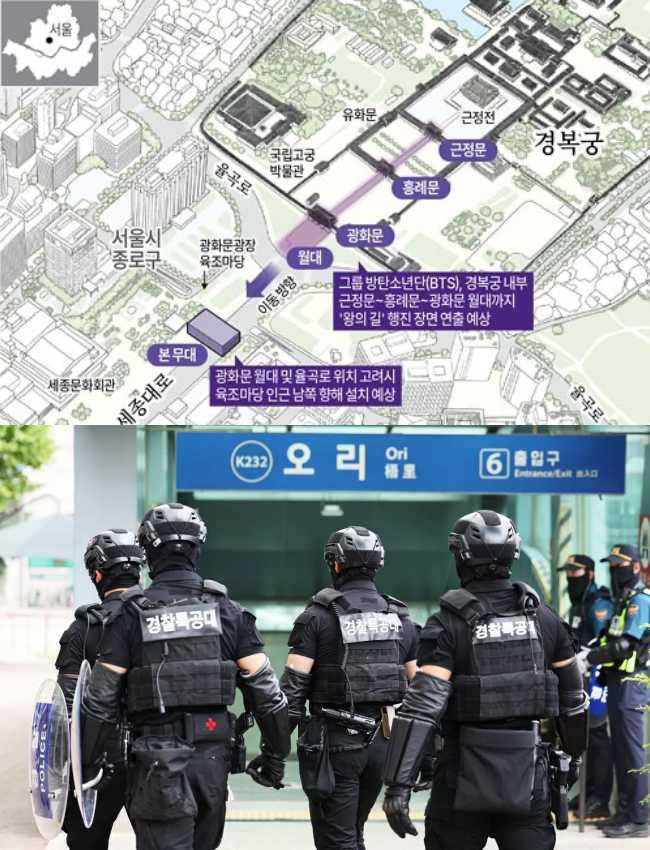
Meanwhile, the area surrounding Gwanghwamun Square has effectively entered an emergency state ahead of BTS’s return. Gyeongbokgung Palace has even decided to close on the day of the concert in an effort to ensure public safety.
On the 28th of last month, the National Heritage Administration announced, “Gyeongbokgung Palace is expected to be temporarily closed to visitors on Saturday, the 21st.” Normally, the palace opens on weekends and closes regularly on Tuesdays. A weekend closure is an extraordinary measure, prompted by concerns over the massive crowds expected on the 21st — the day of BTS’s live comeback celebration.
According to the minutes of a Cultural Heritage Committee meeting, BTS submitted a filming plan featuring an opening scene in which the artists emerge from all three archways (Hongnyemun Gate) of Gwanghwamun and walk toward the square. Historically known in Korea as the “King’s Road,” this route perfectly aligns with BTS’s return — widely hailed by global media as “the return of the kings of K-pop.”
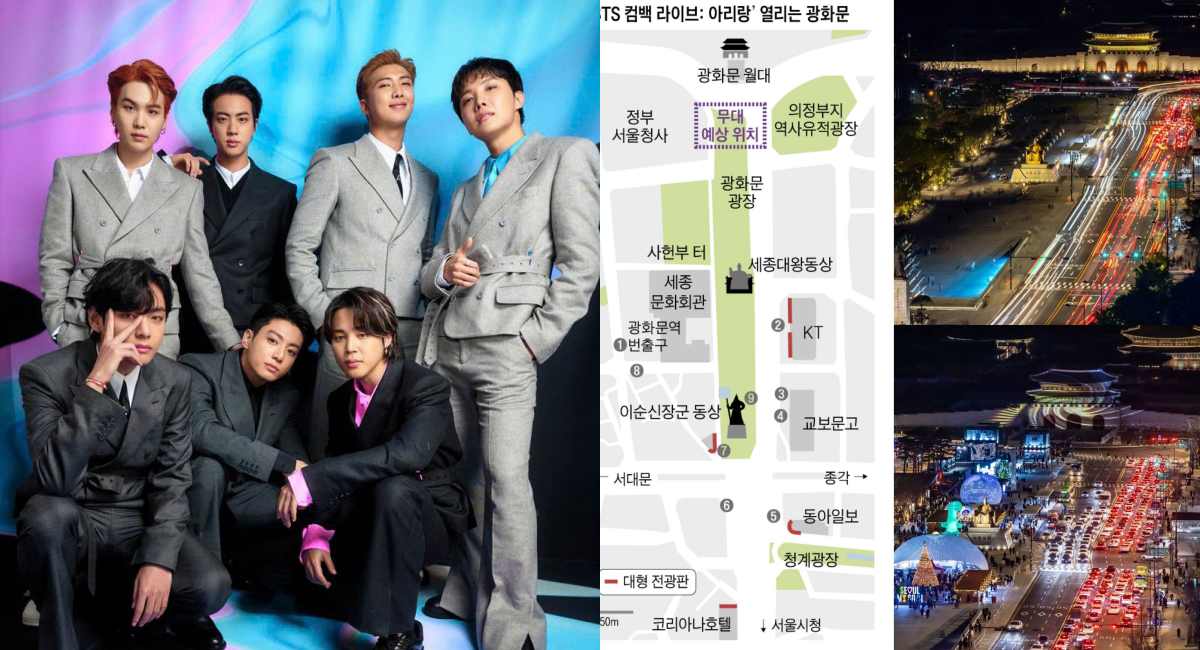
Not only Gyeongbokgung Palace, but nearby institutions are also implementing temporary response measures. The National Museum of Korean Contemporary History will close on the day of the event, while the Sejong Center for the Performing Arts has canceled or adjusted schedules for musicals, plays, and ballet performances. The National Palace Museum of Korea is also reportedly considering a temporary closure.