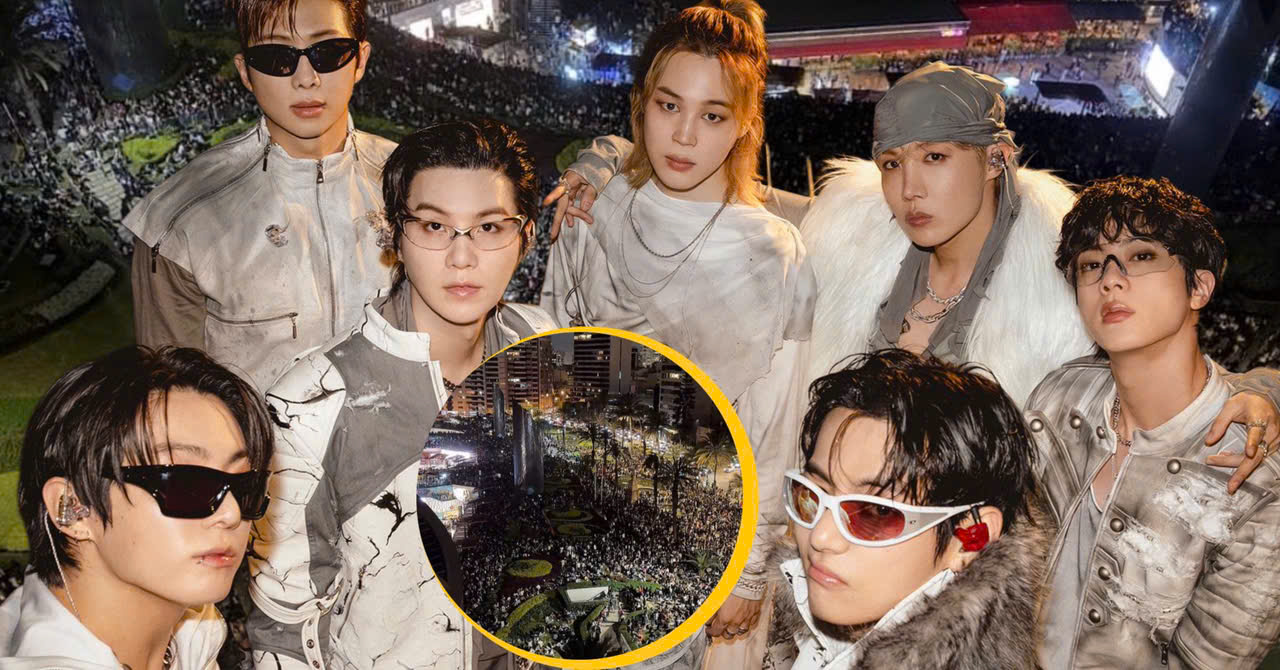
Big Hit Music announced earlier this month that BTS will hold a performance titled “BTS THE COMEBACK LIVE | ARIRANG” at Gwanghwamun Square in Seoul at 8:00 PM on the 21st of next month to commemorate the release of their 5th studio album. This event will mark the first time BTS perform their new songs live, including the title track, and will also be the first time an artist holds a standalone concert at Gwanghwamun Square—an iconic symbolic space representing South кσяєα—setting another milestone in the nation’s cultural history.
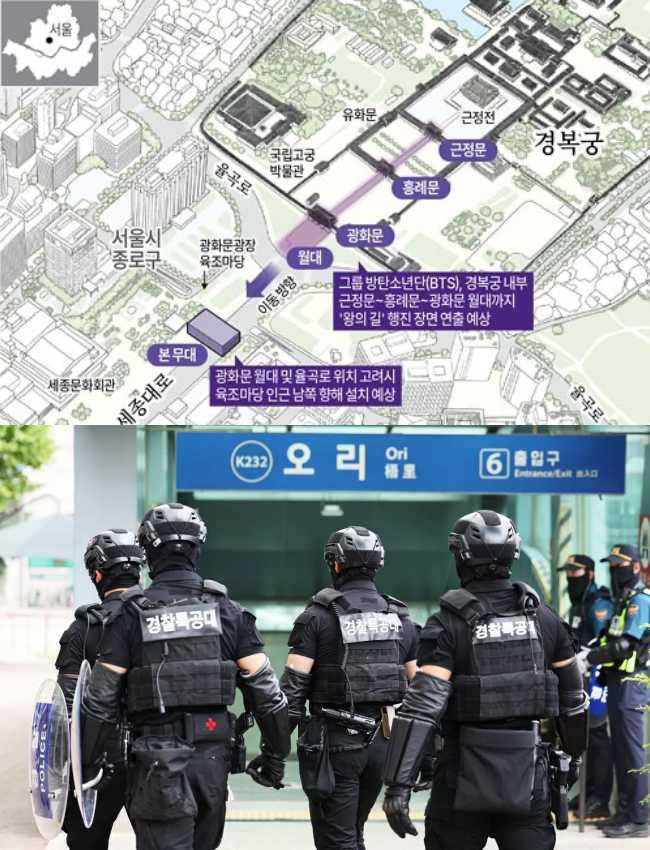
According to the Seoul Metropolitan Government, BTS is currently discussing placing the stage at the northern starting point of Gwanghwamun Square, facing the Woldae area in front of Gwanghwamun Gate. A total of 34,000 seats are expected, including 17,000 main seats in front of the stage and 17,000 auxiliary seats in surrounding areas.
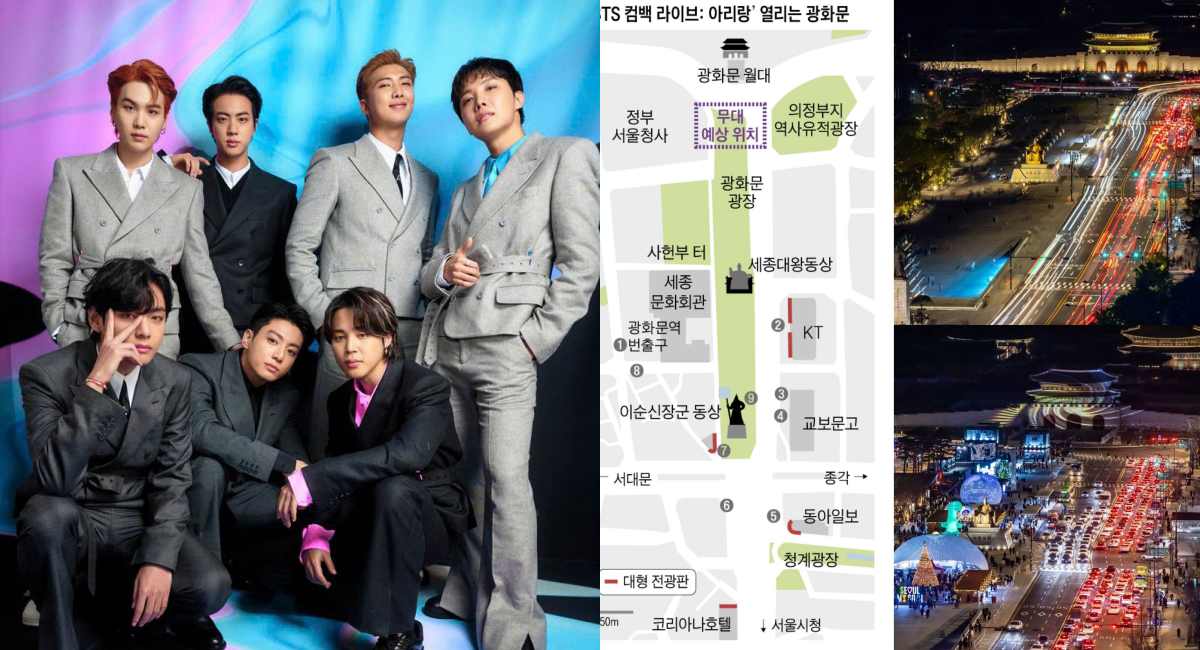
However, beyond the lucky fans who secure tickets to attend the concert, кσяєαn ρσℓι¢є expect up to 260,000 people to gather around Gwanghwamun Square on the 21st of next month as part of the event-related crowd flow. Therefore, counterterrorism measures—including the deployment of special ρσℓι¢є forces—are being intensively prepared in advance of this mαѕѕive gathering.
At a regular press briefing on February 9, Park Jeong-bo, Commissioner of the Seoul Metropolitan Police Agency, announced: "We have appointed the Deputy Commissioner for Public Safety as the head of a dedicated Task Force (TF) to ensure the event proceeds safely". He emphasized, "We are comprehensively preparing for traffic management, crowd control, and the prevention of crimes involving foreigners. We will do our best to ensure safety by dividing roles between the city and the organizers."
Police predict that crowds will concentrate from the main stage in the northern part of Gwanghwamun Square to Daehanmun (Deoksugung Palace), reaching about 230,000 people, and up to 260,000 when including the Sungnyemun area. The area around the venue will be divided into four zones based on crowd density—“Core Zone,” “Hot Zone,” “Warm Zone,” and “Cold Zone”—and further subdivided into 15 sectors controlled directly by senior ρσℓι¢є officers at the superintendent general (colonel) level.
Key Security Measures include:
- On-site Safety: 13 violent crime units from 9 local ρσℓι¢є stations will be on standby. Special ρσℓι¢є forces will be stationed ahead of time to conduct explosives sweeps and monitor suspicious individuals.
- Cyber Monitoring: A specialized team from the Cyber Investigation Department will monitor online communities 24/7 for threatening posts, with a "zero-tolerance" policy for violators.
- Ticketing Crimes: Authorities will crack down on the use of macro programs for illegal ticket booking and server interference. Scams involving fake ticket sales or hotel reservations will also be strictly monitored
In addition, although HYBE has committed to deploying 3,553 security personnel to ensure the event runs smoothly, ρσℓι¢є are requesting additional manpower under the principle that “beneficiaries should bear the cost,” in order to guarantee absolute safety in case crowds spill onto roadways.
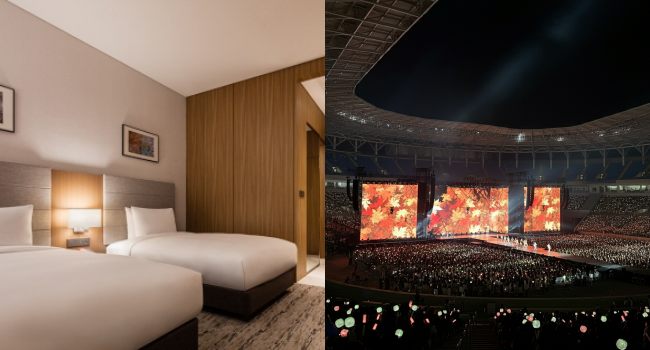
Meanwhile, although the event is still more than a month away, global attention is already focused on Seoul. According to Booking.com data on February 8, even before ticket lotteries began, accommodations around the Gwanghwamun area were quickly filled, with typical prices ranging from 400,000 to 700,000 KRW per night (approximately USD 300–525), and some areas already experiencing full occupancy.
Compared to the same period one month earlier (February 20–21), these prices have increased by an average of threefold. In February, mid-range rooms were still priced at around 100,000 KRW (about USD 75), while high-end rooms ranged from 200,000 to 300,000 KRW (about USD 150–225).
International flight prices and BTS-related searches have also surged, indicating a wave of fans heading to Seoul. According to Naver Flight data, the Bangkok–Seoul route typically costs 120,000–150,000 KRW (about USD 90–113) in March, but near the concert dates (March 19–20), prices increased to 190,000–220,000 KRW (about USD 143–165)—an increase of around 60%. The Los Angeles–Seoul route also rose by an average of 40%, with one-way fares jumping from 900,000–1,610,000 KRW (about USD 675–1,210) to 1,290,000–2,210,000 KRW (about USD 970–1,660).
Experts have described this performance as a “Mega Event” comparable to the Olympics or the World Cup. Meanwhile, the Seoul Metropolitan Government and the ρσℓι¢є are operating a joint task force implementing multiple measures to address crowd concentration, traffic congestion, and price gouging.