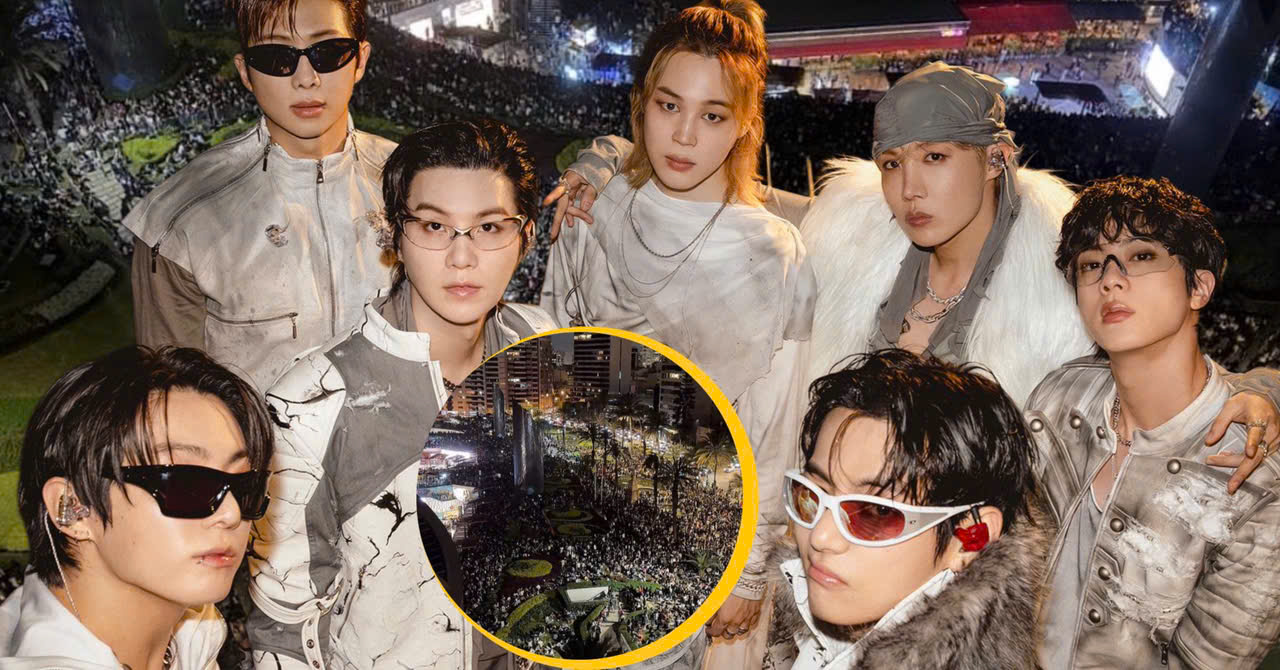
Just two days remain until BTS's concert in Busan, but the city’s safety measures have become the subject of growing controversy. Although this mega-scale event was announced at the beginning of the year, Busan only began mobilizing security personnel shortly before the concert. The city explained that it had no choice but to formulate its response plans after HYBE submitted its final disaster management and event safety plan at the end of May.
However, under the Performance Act, HYBE’s responsibility is limited to managing safety inside the concert venue. Critics argue that since crowd control and traffic management outside the venue fall under the jurisdiction of the local government, the city should have prepared external safety measures well in advance. In particular, Busan was ultimately forced to revise its plans for BTS’s upcoming concert after facing strong public backlash over the alleged "forced" overtime αѕѕignment of civil servants.
.jpg)
According to the original plan, the city intended to deploy approximately 915 civil servants to direct traffic and maintain public order around Sajik Stadium on the day of the concert. The plan was revealed through an anonymous post on the workplace community platform Blind, which questioned why government employees were being αѕѕigned to support a commercial concert organized by a private company instead of personnel hired by the event organizer. As a result, debate quickly spread across South кσяєαn social media over the appropriateness of using a large number of public employees for a ticketed event run by a private business.
Another civil servant commented, "A structure is repeating where private companies pocket the profits while the public sector takes on the burden of safety management outside the venue. There is a need to institutionally reform the safety management standards and cost-sharing systems for mega-scale private events."
The city, however, argued that such support was unavoidable because the concert is a mega-scale event attracting worldwide attention. A Busan city official stated, "Public officials were not mobilized for the profitable business of a private enterprise. As an event that draws worldwide attention, it should be viewed as a measure to enhance the city's brand value and ensure the convenience and safety of citizens and foreign tourists."

Nevertheless, the Civil Servants’ Union issued a statement demanding the “cancellation of the forced mobilization of personnel for a private concert” and met with the Deputy Mayor for Administrative Affairs to voice its opposition. Following the protest, the mobilization мєтнod was changed to a voluntary system. Amid mounting criticism, Busan officially confirmed that it would withdraw its original plan to dispatch civil servants to αѕѕist on-site. Instead, the city decided to recruit volunteers to help ensure the event runs smoothly.
In an official statement, Busan said: “The civil servants initially αѕѕigned were planned to handle traffic control and public order maintenance around Sajik Stadium on the day of the concert. However, after the controversy emerged, we held internal discussions and decided to withdraw the plan. Instead, we are currently accepting volunteer applications for that day, and the exact number of personnel and αѕѕignments will be finalized on the 10th. Even if the number of staff ends up lower than originally planned, we will place personnel where needed to ensure maximum public safety.”
As a consequence, the number of city civil servants αѕѕigned to the event has been reduced from roughly 900 to 390, while the total support workforce has fallen from the originally projected 1,800 people to 1,228. However, this change has also sparked another concern. One official noted, "In a situation where the burden of crowd management has intensified since the Itaewon disaster, the safety personnel initially deemed necessary has been heavily reduced. If an α¢¢ι∂єит occurs by any chance, it will be difficult for the city to be free from liability, which is a heavy burden."
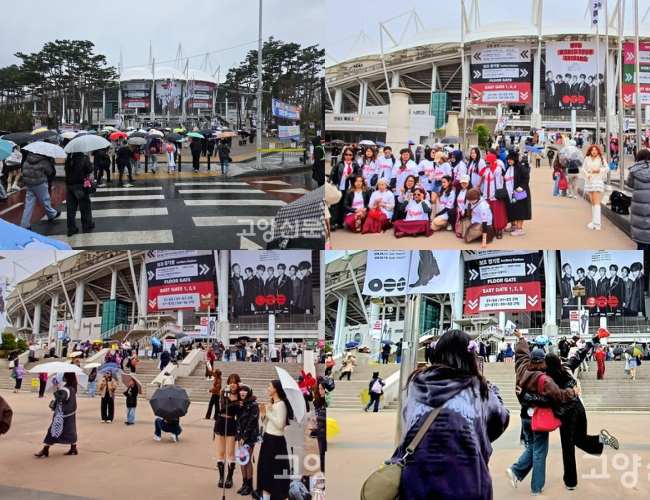
This is not the first time Busan has faced criticism in connection with BTS’s concert. Previously, the city drew widespread anger from fans for failing to control the sharp surge in accommodation prices. A survey of 135 lodging establishments found that room rates during the concert period increased by an average of 2.4 times compared with the weekends immediately before and after the event, with some properties raising prices by more than five times. Rooms that normally cost around 100,000 won climbed to 750,000 won, while some accommodations that typically charged 300,000 won were priced as high as 1.8 million won.
Even the BTS members publicly expressed their disappointment. RM said, "Ahead of this Busan concert, there have been way too many news reports about accommodation venues. I really wish they wouldn't do that." Jimin added, "Since people are coming to Busan after a long time, I want them to leave with only good memories. Of course, I understand that money is important, but this is just way too extreme." Jungkook later expressed his frustration even more directly by using the Busan dialect, saying, "Cut it out," and "They shouldn't be doing that."

Now, with the concert only days away, the latest controversies surrounding the event’s organization have further highlighted what many see as the city’s shortcomings in planning, operations, and management, leading to widespread disappointment. Some fans have even pleaded with BTS to reconsider holding future concerts in Busan.