In recent years, there have been many debates about what counts as K-pop and what does not—especially as more and more foreign elements continue to blend into the industry. For example, the number of English-language songs released by K-pop idol groups has increased, and many tracks are heavily influenced by U.S./European production techniques or even entirely written by Western songwriters.
In particular, in recent years, K-pop has seen more groups debut in which more than half of the members are not кσяєαn. There have even been groups whose entire lineup consists of foreign members, such as BLACKSWAN and KATSEYE.
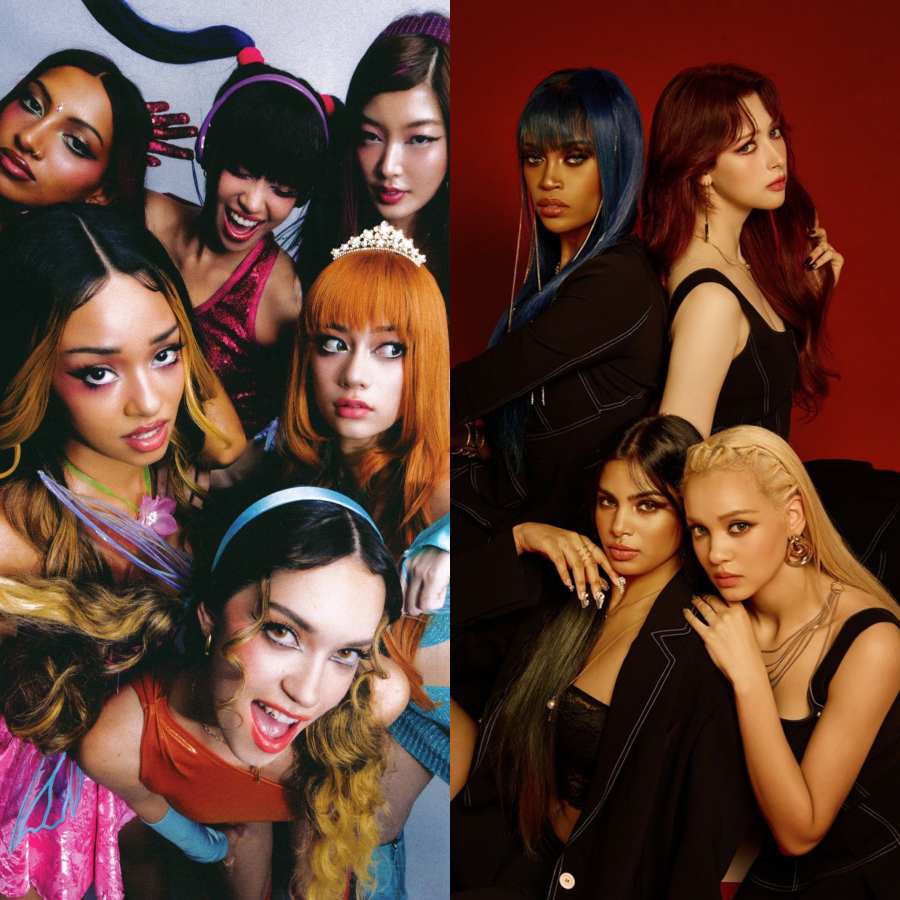
Some fans criticize these multinational groups for gradually drifting away from K-pop, or argue that they are not qualified to be considered K-pop idols—even if their music sounds like K-pop or many of their songs are in кσяєαn.
Meanwhile, this question of “K-pop or not K-pop” is soмєтнing even BTS has repeatedly faced in articles and media discussions. The K-pop superstars have had to confront doubts about whether they can truly be considered a representative K-pop group, particularly when releasing fully English-language songs or collaborating with Western artists and producers.
With BTS returning with their fifth studio album ARIRANG—which, according to Forbes, “For a group that has achieved global success while holding on to a кσяєαn identity, naming the comeback album after the most beloved folk song in the country reads as a signal to return to the roots”—BTS’s perspective on what “K-pop” is and what it is not has drawn more attention than ever.
In his most recent interview, leader RM immediately acknowledged that he has been asked this question countless times, even overseas. He also noted that his answer has changed over time.

RM stated that when they first attended the Billboard Music Awards in 2017, if anyone asked about what made K-pop unique, he would point to elements such as music videos, sound, choreography, visuals, and multimedia content. At that time, RM said K-pop could be defined as a comprehensive fusion of all those components.
But from the 2020s onward, RM explained, the factors that once shaped K-pop have become less clear. He pointed to groups with foreign members, saying that since they create music within the K-pop genre, they are still considered K-pop groups even if no members are кσяєαn.
He said: "There are many cases where foreigners are members. In fact, even if it is not кσяєα-¢нιиα, there are cases where you become a member from a country that has no origins. In fact, in Western countries, the genre is set to K-POP."
Conversely, RM also highlighted BTS’s own contrasting example, citing “Dynamite.” He explained that the song was created by a group consisting entirely of кσяєαns, yet it was sung completely in English. At the same time, it still followed the K-pop format, with its music video, choreography, and all the unique multimedia elements of the industry.
Specifically, he shared: "We said we were a K-POP group. Now there are teams that are not all кσяєαn. Then we are кσяєαn, all seven people. However, in the case of the song. For example, it ranked first on the Billboard HOT 100. But this was sung in English So this isn’t K-POP? This also has choreography and a music video. Some of our content is all attached".
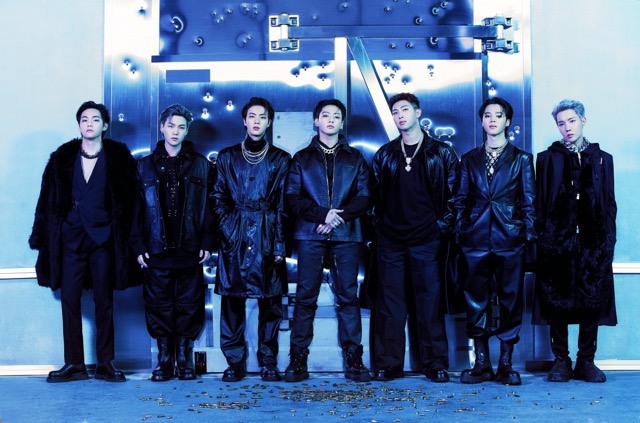
Finally, RM concluded his answer by saying that the scope of K-pop continues to expand, and with it, the meaning of the words and terms αѕѕociated with it keeps evolving. Defining it objectively at this point, he stressed, is impossible—and it will continue to change in the future.
He concluded: "So, in my opinion, K-POP is still expanding. The horizon is expanding. Therefore, if you ask me to define K-POP, I think it will take a while and the meaning keeps changing".
On the other hand, Jimin closed with a simple yet powerful response, urging people to just embrace what they find worthy without forcing any labels onto it. He concluded: "There is such a thing. Good is good. Please like it a lot".

The answers from BTS members serve as a perfect conclusion to the debate, as globalization has clearly shown how boundaries are gradually blurring and becoming harder to define. Moreover, K-pop’s expansion to a global scale should not be seen as a negative development but rather as a way for it to grow and penetrate even the most competitive music markets, such as the West.
Fans were completely convinced by the superstars’ words and strongly agreed with their views. This perspective highlights not only BTS’s role in shaping the global perception of K-pop but also the genre’s unique ability to adapt and evolve with the times. In many ways, the ongoing debate itself proves just how influential and boundary-defying K-pop has become.