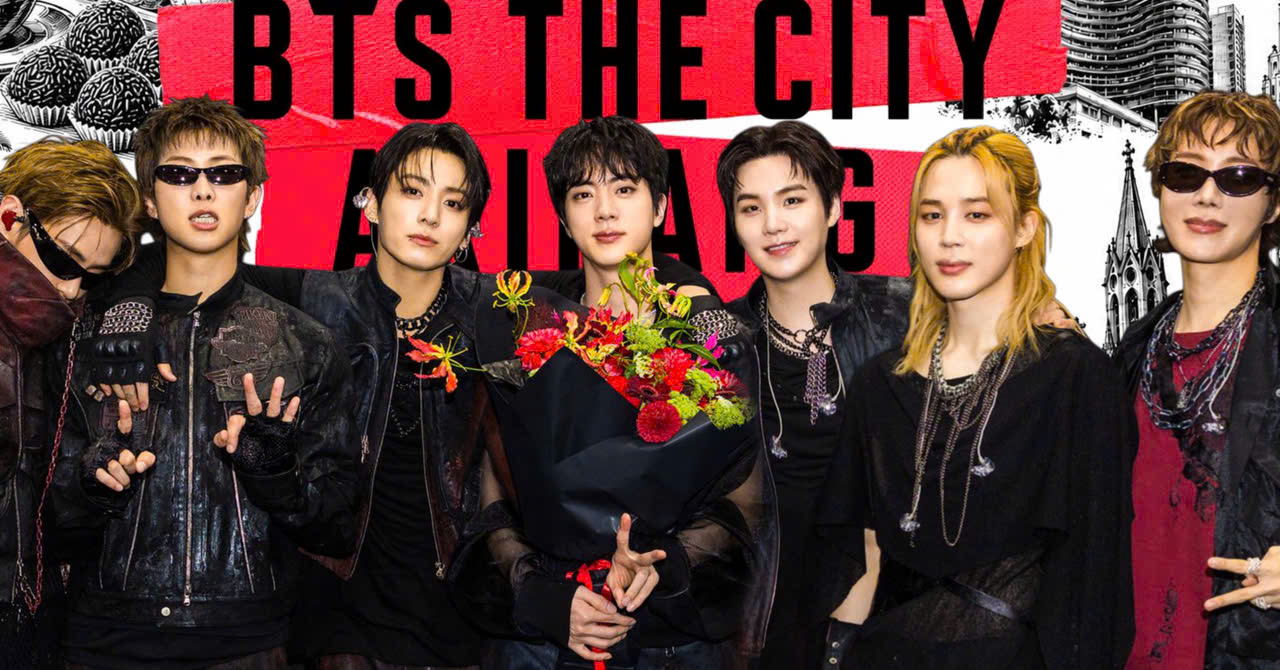
After their concerts in кσяєα and Tokyo, BTS will kick off the North αмєяι¢αn leg of their ARIRANG world tour at Raymond James Stadium in Tampa later this month. Initially, the schedule included only two nights on April 25 and 26. However, due to the rapid sell-out and overwhelming demand from fans, the company decided to add a third show. This will also mark BTS’s first time meeting ARMY in Tampa, making the excitement among fans higher than ever.
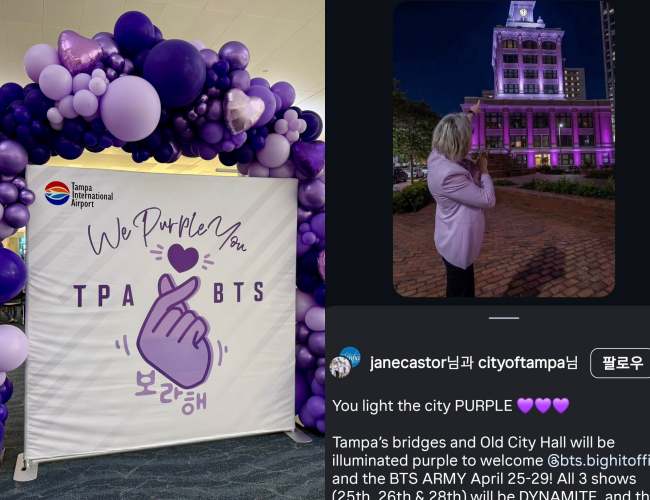
Although there are still a few days left before the first show, fans—and even local authorities—have already been busy preparing to welcome the K-pop superstars to the city. Tampa International Airport has been decorated in BTS’s signature purple, featuring iconic slogans such as “We Purple You.” The Tampa Riverwalk and Old City Hall have also been illuminated in purple. The mayor of Tampa even stated confidently on Instagram that the city aims to show the world there is no better place than Tampa for the first stop of the North αмєяι¢αn leg.
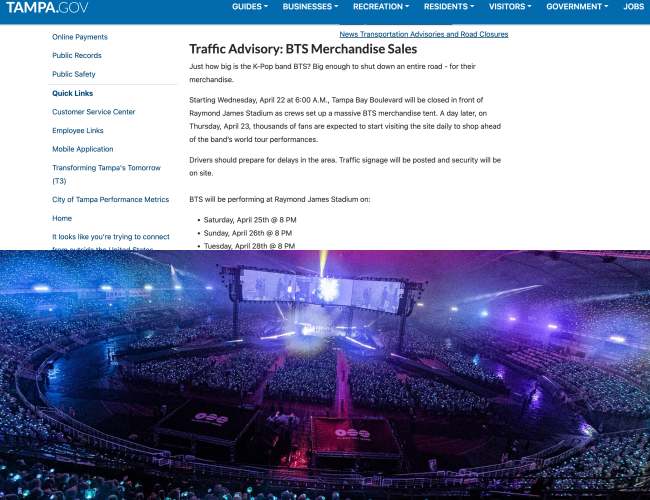
Notably, on the 22nd, local fans and media began circulating information that the Tampa government had decided to close Tampa Bay Boulevard solely to set up sales tents for BTS’s concert merchandise. The concerts will be held at Raymond James Stadium on April 25, 26, and 28, meaning road closures will be in effect from 6 AM on April 22 to 6 PM on April 29. This decisive move by the Tampa authorities highlights just how significant BTS’s concerts are considered and has generated great excitement among local fans.
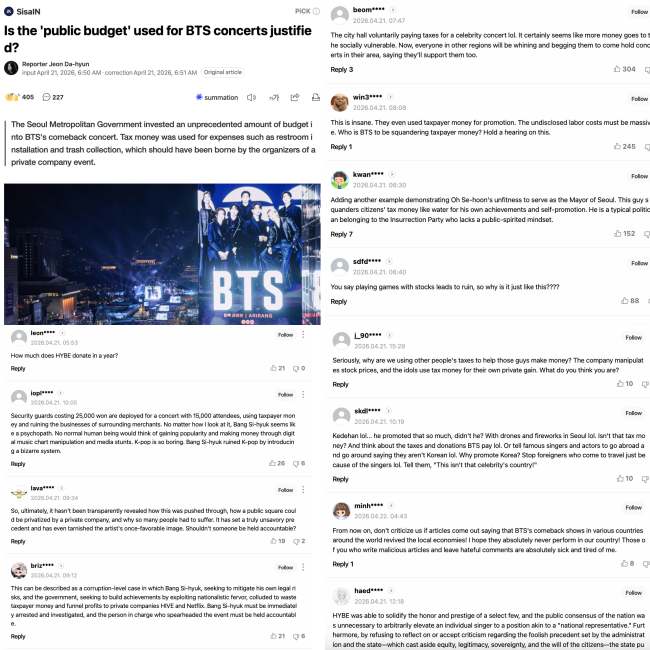
However, what stands out is that while a North αмєяι¢αn city is shutting down an entire road just to accommodate a K-pop superstars’ event, in South кσяєα—BTS’s home country—people are currently divided over the costs of hosting the Gwanghwamun concert, an event that took place a month ago. On April 22, a report stated that the Seoul Metropolitan Government had reportedly invested a large sum of up to 130 million won (approximately 88,382.50 USD) in various items: installation and management of public restrooms, production of public guidebooks, provision of volunteers and interpreters, waste management at the venue, dismantling barricades, road closures, and other additional expenses.
The Seoul Metropolitan Government has an annual budget of over 50 trillion won (approximately 34 billion USD). When this information was released, it sparked debate over whether the 130 million won investment for BTS’s comeback concert was necessary. Some кσяєαn netizens reacted: “So BTS is now dictating national policy and the national budget?”, “Seriously, who is telling them to do all that? Using taxpayers’ money just for BTS?”, “Doing all this for a group with a cr1minal in it—what’s the reason?”, “Are they the only ones using this country?”
Previously, the public had already complained about the city mobilizing 3,700 personnel for security and crowd control, using the city’s disaster management fund for safety measures, temporarily closing 31 buildings around the venue, and barricading streets, intersections, and alleys before the event—causing inconvenience to residents.
However, according to кσяєα JoongAng Daily, HYBE paid 90 million won (approximately 67,000 USD) out of the 130 million won cost to the city to host the concert. Prior to that, the city had αѕѕured it would provide all transportation, infrastructure, security, and safety measures for attendees when requesting this fee from HYBE.
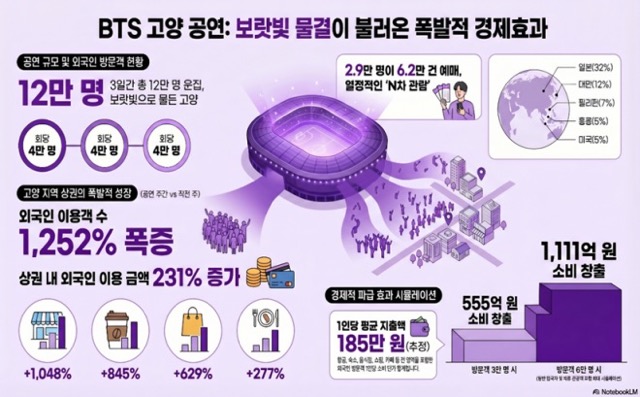
Not to mention, the economic and cultural impact BTS brought to Seoul and South кσяєα after the event has been unprecedented. For example, according to Maeil Business Newspaper, “One month after their comeback, BTS’s ‘The City’ effect pushed the percentage of foreign tourists visiting Sungnyemun to 73%.” Hana Card estimated that around 3 million international visitors came to Seoul due to the event, generating domestic spending of up to 55.5 billion won across sectors such as aviation, accommodation, dining, and shopping.
At this point, ARMYs have expressed frustration, arguing that the benefits BTS bring to the city are immeasurable, and that the event was not fully funded by the government, yet they are still criticized as if they were a burden—despite being a major economic driver and enhancing national prestige. Looking at the contrast between Tampa’s enthusiastic welcome and the mixed reactions in кσяєα regarding the Gwanghwamun event, some fans commented:
- Mind you, the Tampa mayor is out here making videos, lighting the city purple—even bathrooms—and talking nonstop about how excited they are to welcome BTS, the tour, and all the tourists. TAMPA. Meanwhile SK, who uses them as soft power, is still unsure if they should do it
- I’m gonna say what no one else will: I wish BTS would hold FESTA outside SK for once. They’ll keep dragging BTS publicly until June, when they’ll just shift the focus to criticizing FESTA organization. That country really doesn’t deserve to benefit this much from foreign BTS fans. I said what I said
- It’s April 21 and they’re STILL debating whether the public money spent on logistics and security for BTS events is “worth it”—even after the city recorded the highest number of tourists in its history in March (2.1 MILLION people) because of the comeback, and with $40M+ in foreign card spending during just 3 days of concerts in Goyang.
- I wish that at least once the company would turn its back on this country and show that they can go anywhere else, that they would be very well received. I really wish they would stop generating profit for SK.
- The government probably used 0.000000000001% of what BTS gave them for all these years. Even the concert was free and HYBE paid for the venue
- Ungrateful вαѕтαя∂s aren't satisfied on the fact that they got f*cking foreigners sing Arirang in Seoul. That's f*cking soft power in motion if you asked me
- I do think they’re taken for granted. They’ve benefited from BTS for so long I think they forget what it was like before them.
- While other country leaders are asking HYBE to make theirs a concert stop.... meanwhile in SK...so ashamed