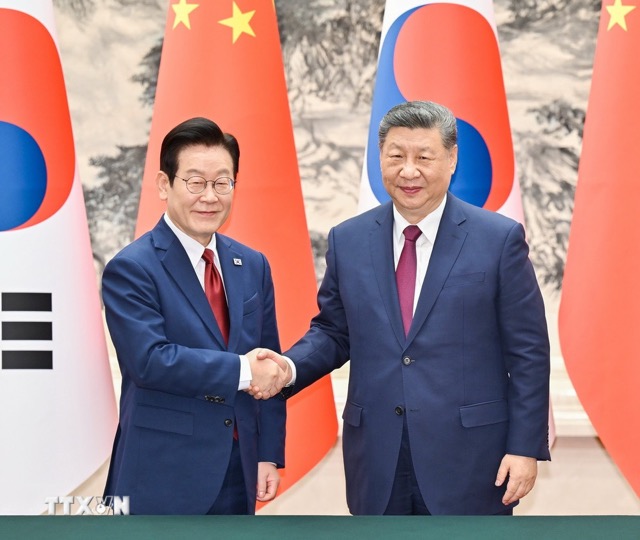
In January this year, Chinese President Xi Jinping and South кσяєαn President Lee Jae-myung met in Beijing during Lee's state visit to ¢нιиα. At the Great Hall of the People, the two leaders held discussions on a wide range of key bilateral issues, including security, the economy, cultural exchanges, and regional peace.
Notably, the two sides also discussed expanding cultural exchanges and entertainment content, including measures to increase the presence of кσяєαn culture in ¢нιиα after years of restrictions. President Lee and President Xi agreed to strengthen people-to-people exchanges, particularly among young people, as well as cooperation in the media, sports, and local government sectors between regions and cities.
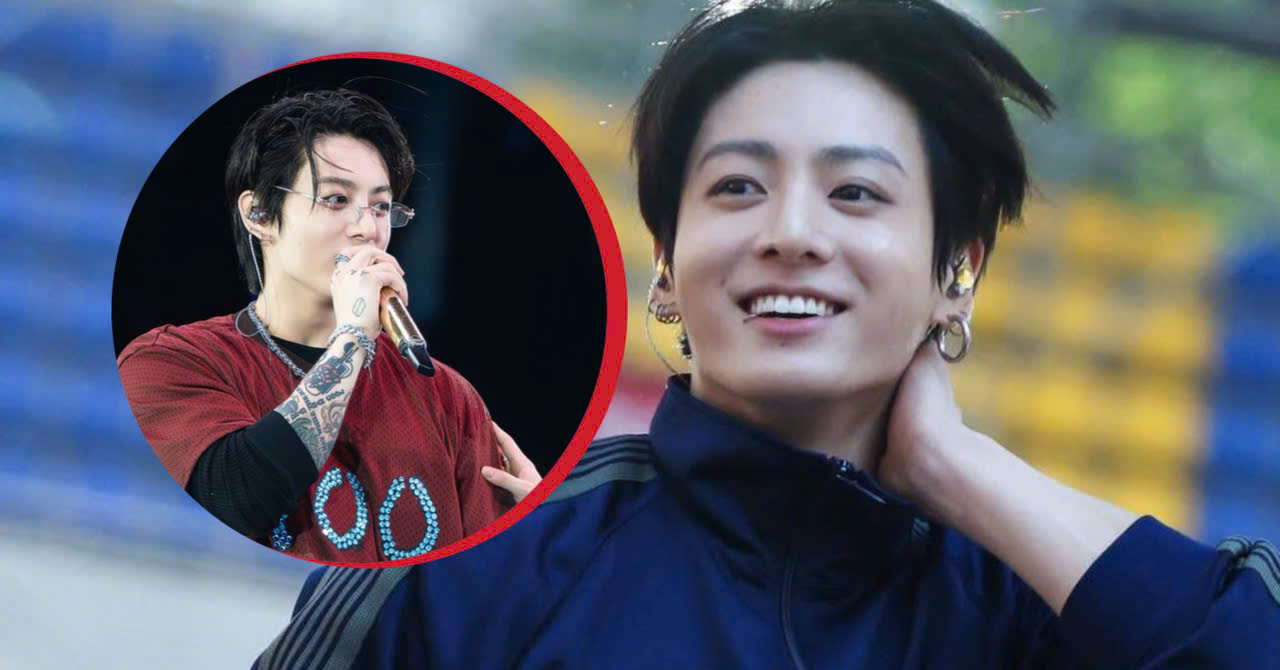
The discussions immediately sparked hope among fans that BTS' world tour might eventually include Beijing as one of its stops. However, the reality remains that despite the recent thaw in relations between Seoul and Beijing, the prospects of lifting the so-called "Hallyu ban"—the unofficial restrictions imposed on South кσяєαn cultural content in ¢нιиα—remain uncertain.
As a result, mainland ¢нιиα is still absent from BTS' 2026 world tour itinerary. Even after the tour expanded to 88 shows across 34 cities worldwide, the group has yet to schedule a single concert in the mainland.
ѕιиgαρσяєan newspaper Lianhe Zaobao reported that although BTS boasts more than 5.6 million followers on Weibo, the group has only confirmed three concerts in Hong Kong in March 2027. The report noted that this underscores how the unofficial restrictions—widely believed to have stemmed from South кσяєα's deployment of the THAAD missile defense system in 2016—remain firmly in place in mainland ¢нιиα, where large-scale K-pop concerts have been virtually nonexistent for nearly a decade.
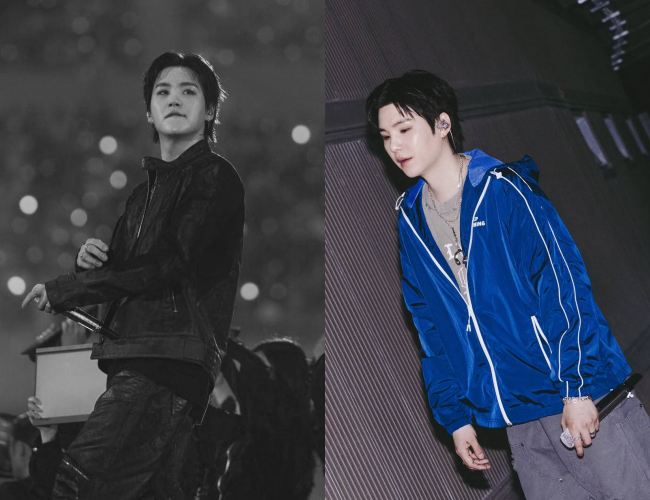
In this context, fans recalled a “predictive” remark made by SUGA during a live broadcast. At the time, fans asked him to hold a concert in mainland ¢нιиα, but he immediately responded with visible helplessness: “Everyone, it isn’t possible for me to perform in chínα.”
He explained that promoting music in ¢нιиα is extremely difficult—even for groups with Chinese members. He pointed out that if a group includes a Chinese member, only that individual member may be allowed to work domestically, while the group as a whole is not permitted to promote there. "In one K-Pop group these days, there are кσяєαns, Chinese, and members from different nationalities. I’ve seen instances where the Chinese members are allowed to work in chínα, but the group itself is not allowed to", he said.
A clearer example supporting SUGA’s explanation is aespa. Since Ningning is Chinese, she can return to ¢нιиα and carry out individual activities, but aespa as a group cannot perform in ¢нιиα. The cases of SEVENTEEN and WayV are similar, despite also having Chinese members.

Not only SUGA, but even industry experts and academics have expressed similar views to this day. South кσяєαn President Lee’s recent visit to ¢нιиα may signal a diplomatic thaw, yet experts believe that any relaxation of cultural restrictions will unfold "painfully slow."
Sarah Keith, a media scholar at Macquarie University, noted that it could take up to five years for кσяєαn artists to restore their presence to pre-ban levels. She also emphasized a “cultural deficit,” arguing that ¢нιиα’s strong consumption of кσяєαn content may lead Beijing to prioritize the interests of its domestic entertainment industry.
While smaller-scale “cultural exchange” activities—such as fan-signing events—may gradually resume in first-tier cities, analysts believe that stadium-level tours are unlikely to return anytime soon, as Beijing continues to balance market demand with the protection of domestic industry interests.
In fact, even during the bilateral summit itself, Xi Jinping continued to imply how difficult it would be to lift restrictions on Hallyu, stating: "A three-foot layer of ice does not freeze in a day, nor will it melt all at once. Fruit falls only when it is ripe."
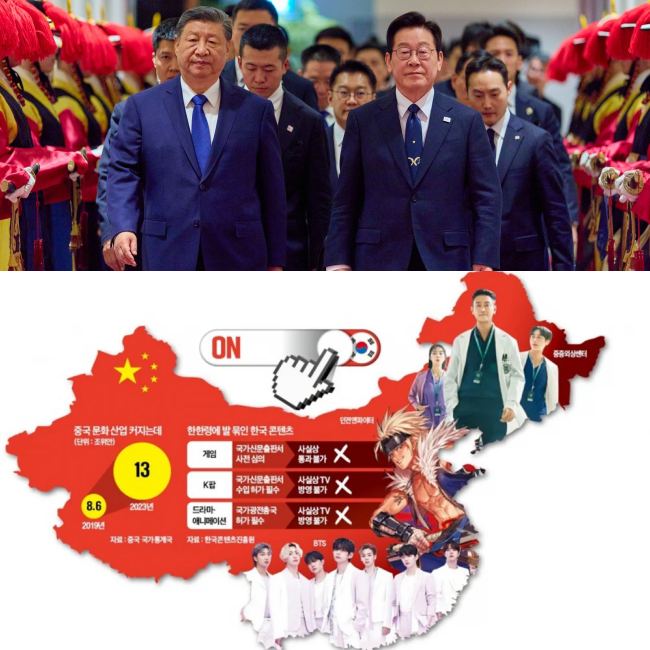
The thick layer of ice restraining Hallyu began around 2016, after South кσяєα deployed the THAAD system. Since then, for nearly ten years, not a single K-pop idol stage or concert has been held in mainland ¢нιиα. Meanwhile, Hallyu-related music, films, and variety programs have often been restricted, denied licensing, and blocked from broadcasting on Chinese platforms.
Beyond being an unofficial retaliatory measure against South кσяєα, this also stems from Beijing’s defensive mindset—fearing that the Hallyu wave could bring capitalist influence and undermine ¢нιиα’s cultural foundations. Although music and politics are two different spheres, in reality they profoundly shape one another. And ¢нιиα, clearly, wants to curb the penetration of кσяєαn culture into the mainland for as long as possible.