South кσяєαn stocks closed slightly lower on Wednesday as investors stayed on the sidelines while the U.S. Federal Reserve’s rate-setting meeting remained underway. The benchmark кσяєα Composite Stock Price Index (KOSPI) ℓσѕт 8.55 points, or 0.21 percent, to end at 4,135. Trading volume was moderate. Meanwhile, the KOSPI finished in negative territory in the previous session.
In particular, investors viewed K-pop entertainment stocks — including even the Big 3, SM, YG, and JYP — as among the least attractive during this period. SM Entertainment saw its share price plunge due to the poor performance of its subsidiaries DearU and Dream Maker, as well as stagnation in its overseas expansion efforts. Hanwha Investment & Securities, Eugene Investment & Securities and NH Investment & Securities all slashed their target price for SM shares to the 150,000–170,000 won range.
YG Entertainment was also negatively affected, with securities firms cutting their target prices by an average of 15 percent despite ongoing tours by BLACKPINK and BABYMONSTER. IBK Investment & Securities lowered its target from 120,000 to 100,000 won, while NH Investment & Securities reduced its projection from 135,000 to 115,000 won. JYP Entertainment was no exception.

However, amid this broader downturn, one group of stocks continued to attract strong inflows from retail investors — HYBE. During trading on the 10th, HYBE rose 2.75% on the main market and climbed an additional 3 percent in aftermarket trading. At one point, the surge in retail investment was so strong that the share price briefly surpαѕѕed 310,000 won.
In fact, since early December, HYBE shares have remained relatively stable — or even slightly up — instead of suffering a significant decline despite volatility. Analysts continue to set the company's average target price at a relatively high level, around 368,840 won, with estimates ranging from 300,000 to 420,000 won. Most analyses rate HYBE as a “strong buy.”
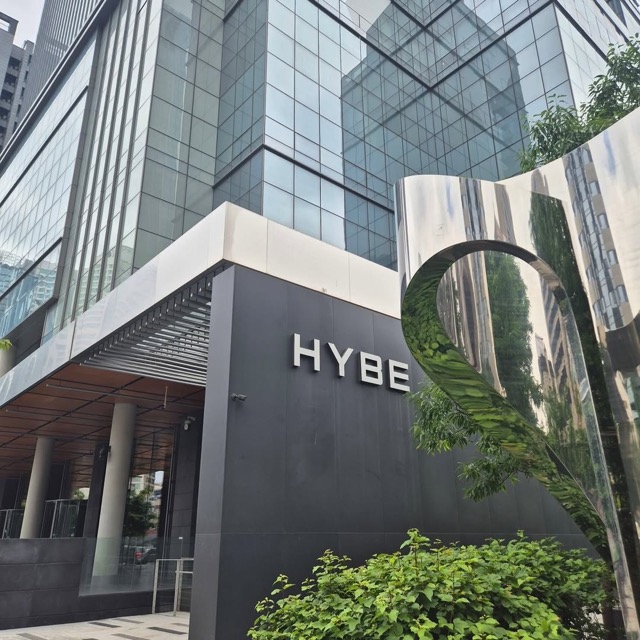
So why is there such a clear difference? Analysts at DaoL Investment & Securities wrote in a report on the 10th that HYBE’s upward momentum is driven by strong expectations for BTS’s comeback next year — the company’s flagship group and its most important mega-IP. A full-member album return in March and an eight-month world tour afterward hold strong appeal for investors.
Meanwhile, SM, JYP, and YG share the same challenges: slowing growth in activities from old IPs, expanded group activities but lack visible results, and large IP gaps - leading to a limit in market expectations for Big 3 stocks.
This situation underscores just how valuable and crucial BTS’s IP is within the market. For investors, BTS represents stability and the ability to generate revenue “ѕнσ¢кs” on a scale no other K-pop group can currently match. BTS has the power to create globally influential IPs that can uplift an entire company — even during periods when the stock market is saturated.

Beyond stock performance, experts also noted that HYBE recorded its first quarterly loss since listing during the third quarter, but they predict that BTS’s comeback next spring will quickly offset the deficit.
Notably, the return of the “21st-century pop icons” is also expected to revitalize a K-pop industry showing signs of saturation due to the absence of a truly dominant, globally influential group.
Since 2024, K-pop album sales have dropped 19.4 percent, falling to just 93 million copies. This year, according to a December 10 report by the кσяєα Music Content Association, cumulative album sales (based on the Top 400) reached about 80.5 million copies in the first 10 months — down roughly 810,000 from the previous year. If the current trend continues, full-year sales are projected to reach around 90 million, signaling continued stagnation.
Export indicators are also declining. According to the кσяєα Customs Service, album exports through October reached US$243.84 million, down 2.7 percent year-on-year. נαραи — the largest export market — saw an 11.1 percent drop, from US$79.23 million to US$70.45 million. Exports to the United States and ¢нιиα also fell by 5.9 percent and 6.5 percent, respectively.
“Fortunately, there is still hope in the full-group return of BTS, who have completed their military service. With BTS announcing the release of a new album in the first half of next year, attention is now focused on expectations that their activities may serve as a catalyst for market recovery,” Edaily wrote in a December 11 article.
Meanwhile, Kim Jin-woo, a music industry expert and data journalist, expressed a similar view: “BTS sells an average of more than 7 million albums every year.” He added, “With their ability to simultaneously dominate the three major markets — נαραи, the U.S. and ¢нιиα — album exports could also rebound.”