On the 29th, all seven BTS members surprised fans by simultaneously posting the same message on their personal social media (SNS) accounts: "We've decided not to submit our work for this year's Grammy Awards." Many analysts believe the decision is connected to the Recording Academy's newly introduced Best Asian Pop Music Performance category. Within the music industry, critics have argued that separating K-pop—and Asian music as a whole—into its own category effectively creates a new "wall" that isolates Asian artists from competing on equal footing.
However, BTS did not directly mention the new category or provide a specific explanation for their decision not to submit their work. Instead, through their statement—"We hope music will be recognized and loved for what it is, rather than being divided by region or language"—the group subtly conveyed the meaning behind their decision. Ironically, BTS themselves have just demonstrated how powerful music can be when it is embraced purely for its artistic value through the remarkable figures revealed in HYBE's latest second-quarter earnings report.

According to HYBE's newly released financial results for the second quarter of 2026, the company posted 1.45 trillion KRW (approximately US$993 million) in revenue, representing a 105.5% increase compared to the same period last year. Operating profit also climbed to a record 170.9 billion KRW (approximately US$116 million), up 159.3% year-over-year.
HYBE stated that this marked the first time its quarterly revenue had surpαѕѕed 1 trillion KRW, while operating profit exceeded 100 billion KRW for the first time. Net profit soared 613% to 109.8 billion KRW, and the company's first-half revenue surpαѕѕed 2 trillion KRW for the first time in its history.
The company attributed this unprecedented growth primarily to BTS's comeback with their fifth studio album ARIRANG in March and the launch of the ARIRANG World Tour in April!
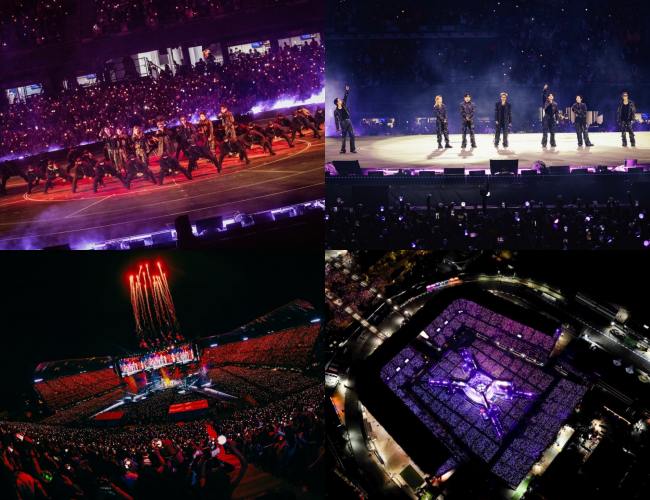
Upon its release, ARIRANG debuted at No. 1 on the Billboard 200, becoming BTS's seventh chart-topping album. Its title track, SWIM, simultaneously debuted at No. 1 on the Billboard Hot 100, giving the group its seventh Hot 100 chart-topper. Even more remarkably, ARIRANG remained at No. 1 on the Billboard 200 for three consecutive weeks, becoming the first K-pop album in history to achieve the feat. Billboard noted that it was the first album to spend its first three weeks at No. 1 immediately after release since Taylor Swift's The Life of a Showgirl.
Alongside the album's overwhelming success, the ARIRANG World Tour has become a global phenomenon. Spanning 88 concerts across 34 cities on five continents, it is currently the largest world tour in K-pop history. According to Billboard, the tour generated 315.8 billion KRW in cumulative revenue within just two months of its launch. The first eight shows alone—in Goyang, Tokyo, and Tampa—grossed US$76.2 million, propelling BTS to No. 1 on Billboard's Top Tours chart.
The numbers continued to climb in the following months. The North αмєяι¢αn leg attracted 840,000 concertgoers, with every show selling out completely. The recently concluded European leg drew another 717,000 attendees, while BTS's two concerts in Paris welcomed 92,000 fans each night, setting a new all-time attendance record for a single BTS concert. Every show on the European leg also sold out during the initial ticket sale.
Beginning in the second quarter, as revenue from BTS's stadium and dome tour flowed in, HYBE's growth accelerated dramatically. By business segment, live performances generated 647.7 billion KRW, while album and digital music sales contributed 326.8 billion KRW. Merchandise (MD) and licensing—which naturally benefit from concert activity—also reached a record 310.6 billion KRW, the highest in the company's history.

Faced with these extraordinary figures, industry experts have coined the term "BTS-nomics," drawing comparisons to Taylor Swift's widely discussed "Swiftonomics." Reuters projected that the ARIRANG World Tour could ultimately gross around US$1.8 billion (approximately 2.61 trillion KRW). Bloomberg offered an even more optimistic forecast, suggesting the tour could reach US$2.2 billion (approximately 3.19 trillion KRW), placing it on par with the total revenue generated by Taylor Swift's The Eras Tour.
HYBE and the Hyundai Research Institute went even further in their analysis, estimating that the combined direct revenue from BTS's comeback and world tour, together with indirect economic ripple effects and increased national brand value, could generate an astonishing 92.7 trillion KRW (approximately US$67 billion) in total economic impact. What was once discussed primarily as a media buzzword has now been substantiated by concrete figures in HYBE's second-quarter financial report.
Against this backdrop, a quote from Forbes journalist Bryan Rolli has resurfaced and is once again being widely shared across social media. In his article titled "BTS's 2020 Grammys Shutout Reveals the Recording Academy's Cultural Blindspot," Rolli famously wrote: "As BTS continue smashing records and the Grammys continue to lose relevance, who really needs who?"
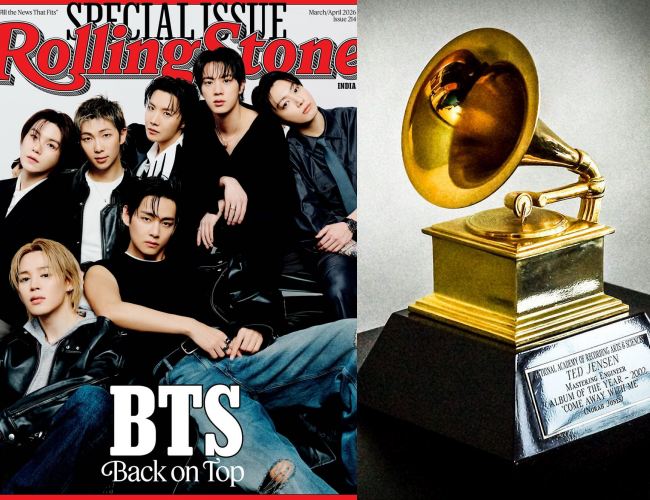
While BTS continue selling millions of albums, topping the Billboard charts, selling out stadium tours around the world, and generating tens of billions of dollars in economic value, the Grammys have increasingly faced criticism in recent years for overlooking critically acclaimed albums, favoring certain genres, lacking diversity, and repeatedly generating controversy in their most prestigious categories.
The Recording Academy has repeatedly been accused of overlooking some of the world's most influential artists. When a major awards institution consistently fails to recognize the musicians shaping today's global music landscape, it inevitably raises questions about whether it can still truly represent the global music industry. Meanwhile, the music business itself has fundamentally changed. Streaming has erased geographical boundaries, and artists who do not primarily perform in English are now capable of dominating the global market. Yet critics argue that the Recording Academy continues to evaluate music through an outdated lens centered largely on the U.S. market, leading to repeated accusations of racial and cultural bias.
At this point, Bryan Rolli's question seems to answer itself. And perhaps BTS's latest decision—not to submit their work for Grammy consideration at all—has become the clearest and most powerful response of all!