Beginning on April 9 at Goyang Stadium, BTS will officially embark on their world tour titled “BTS WORLD TOUR ‘ARIRANG’,” spanning 34 cities across North αмєяι¢α, Europe, South αмєяι¢α, and Asia. With a total of 82 concert dates, the tour is already generating immediate and powerful impacts on the tourism and economic markets not only in South кσяєα but also in many other countries worldwide, including the United States—solidifying its status as a true “global event.”
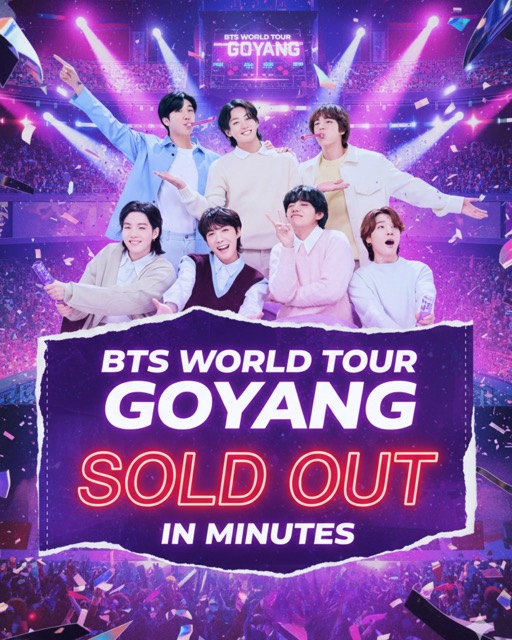
In South кσяєα, all three shows in Goyang sold out their fan club presale tickets within just minutes of going on sale on the 22nd. Even more striking is that the accommodation industry experienced a surge even before concert tickets officially went on sale. An official from SonoCalm Goyang stated on the 15th, "Room reservations from April 9th to 12th are already completely full. We understand that neighboring accommodations are in the same situation." A similar shortage of available rooms has been reported for the Busan concerts, despite the fact that they are still six months away.
According to the global accommodation platform Hotels.com, within 48 hours of the tour schedule being announced on the 14th, searches for trips to Seoul from overseas increased by 155% compared to the previous week. Notably, searches related to Busan surged by an astonishing 2,375%. In key Asian regions such as נαραи, Hong Kong, and Taiwan, demand for Busan-related travel searches rose by several thousand percent. Even domestic searches saw sharp increases, with Seoul up 190% and Busan up a staggering 3,855%.
Beyond its economic impact, BTS is also having a major influence on South кσяєα’s national image. In the Ministry of Culture, Sports and Tourism’s recently released 2025 South кσяєα National Image Survey, BTS ranked No. 1 among кσяєαns who have had a positive impact on the country’s image. Additionally, Jungkook ranked sixth overall, the highest among solo artists.
Reactions from overseas markets have been just as intense. As of the 25th, BTS had sold out multiple concert dates at 44 stadiums worldwide as part of the ARIRANG tour within just three days. At some venues, tickets sold out within minutes. The concerts in Tampa and Stanford (United States) were met with such overwhelming demand that organizers added an extra show in each city.
.jpg)
During the ARMY membership presale, Ticketmaster also reported server crashes in several regions. For the July 11 concert in Munich, Germany, more than one million fans queued online. Tickets for BTS’s concerts on May 7 and May 9 at Estadio GNP Seguros sold out within just 37 minutes, with as many as 1.1 million users simultaneously entering the virtual waiting room in an attempt to purchase tickets.
Additionally, data from local transportation sales platform ClickBus shows that searches for bus tickets to São Paulo increased more than 600 times compared to before the tour announcement.
The UK daily The Guardian also focused on the economic ripple effects expected from BTS’s world tour. It reported economists’ αѕѕessments calling it “a global event capable of having a significant impact on city economies across North αмєяι¢α.” Demand for travel, accommodation, and consumer spending at tour stops is expected to rise even further.
It also cited financial services company Bread Financial, noting that a single concert ticket typically generates more than three times its value in local economic activity. In response, tourism-focused economic analysis firm Tourism Economics emphasized, “These averages do not apply to BTS. They will far exceed those figures, and it is difficult even to estimate the scale of the economic impact this tour will generate.”
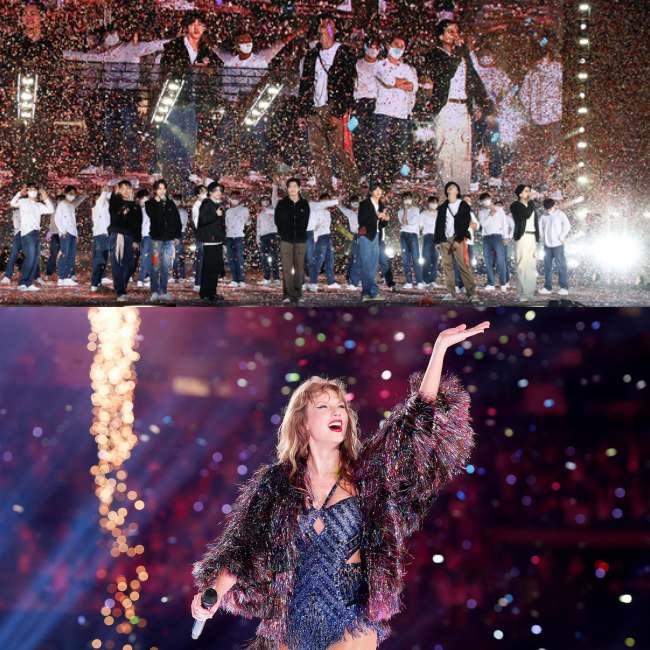
Timothy Calkins, a marketing professor at Northwestern University, also offered a similar αѕѕessment, stating, "The BTS World Tour will be the premier global event of the year." He added, "Every city hosting the tour will see a mαѕѕive surge in tourist numbers, hotel occupancy rates, and overall economic activity. The impact could potentially surpαѕѕ even that of U.S. pop star Taylor Swift."
Swift’s ‘Eras’ Tour was recorded as the highest-grossing tour in history. It is estimated to have triggered approximately $5 billion (about 7.347 trillion KRW) in direct consumer spending across the United States.
Professor Richie Karaburun of the NYU Tisch Center of Hospitality also predicted that the economic ripple effect of the BTS tour would surpαѕѕ that of Swift’s Eras Tour. He noted, “This tour is the much-needed good news for the U.S. tourism industry during a period of stagnation,” and added, “The fact that they (fans) do not travel alone is exactly what amplifies the potential economic impact of this BTS tour.”
Meanwhile, Professor Calkins added, “Concert-goers become tourists who revitalize local economies. These events do more than just draw people to a city; they act as a platform to promote that city to the entire world.” He further noted, “A BTS tour provides a brand-strengthening opportunity that would be difficult to achieve through traditional marketing.”
The Guardian also highlighted stories of fans who booked flights and hotels even before concert tickets went on sale, illustrating just how powerfully BTS is shaking the world. Leslie Huynh (28), who works in film equipment rentals in New York, said: “When BTS announces a tour, you just have to book the hotel and flight first. It’s become a meme that you’ll find a ticket somehow, whether it’s a resale or not.”
Huynh plans to attend 22 shows across 11 cities. She also plans to go on a “pilgrimage” to restaurants and landmarks visited by BTS, explaining, “I consider BTS a very expensive hobby, but it’s because they are the ones I choose to spend my money on.”
Kayley Merulla (25), a content strategist in New Jersey, also plans to attend six shows in three U.S. cities. “BTS helped me through the hardest times of my life. They are a source of unconditional happiness,” she said. “I can’t imagine where I’d be without them. Traveling elsewhere for a BTS concert is an obvious choice for me.”