In a South кσяєαn society that is extremely sensitive to fairness in military service, the country’s special military service exemption system has long been a highly controversial and thorny issue. BTS themselves faced countless controversies surrounding military service in 2020–2021, even though the group had never demanded or asked for any special treatment. It was only after all the members gradually enlisted and completed their mandatory military service that public scrutiny finally moved away from the global superstars.
Notably, this sensitive issue has once again erupted after several national football team players — who had just won the Gold Medal at the 2026 Aichi-Nagoya Asian Games (ASIAD) — openly put “military service exemption” at the forefront, treating it as their biggest goal and even calling it a reward for their victory.
Despite making history by winning the Asian Games for a record fourth consecutive time, instead of receiving congratulations, the players found themselves having to apologize one after another, while even the кσяєα Football Association was forced to bow its head and apologize. The controversy stemmed from an attitude of “playing solely for the goal of receiving a military service exemption.” The backlash quickly went beyond an individual player’s ill-advised remarks and began targeting the system itself.
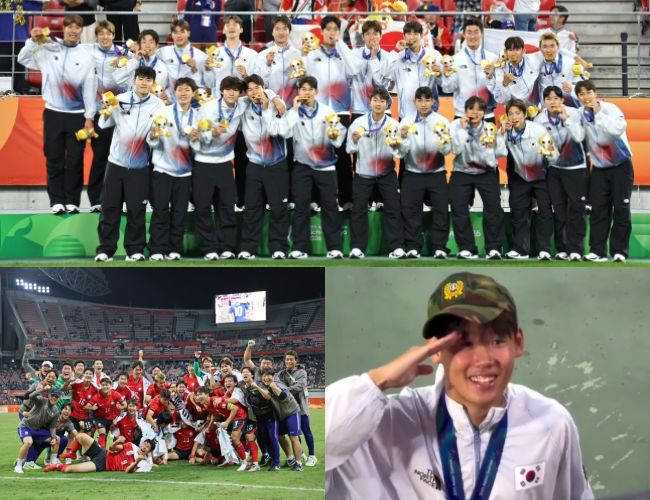
Against this backdrop, what was particularly striking was that several South кσяєαn lawmakers brought up BTS — a group that has helped elevate the country’s standing on the global stage while still completing their full military service and only recently returning in April — as an example when criticizing the players’ stance. At the same time, this has opened up discussions about abolishing or fundamentally reforming the special military service system for athletes.
On October 4, Na Kyung-won, a lawmaker from the People Power Party (PPP), wrote on her personal page: "We must responsibly begin discussions on a fundamental overhaul of the arts and sports military exemption system so that a fair conscription system acceptable to all young South кσяєαns can be established."
"Back when South кσяєα had few ways to promote itself to the world, a single medal represented national publicity, which certainly had meaning at the time," Rep. Na noted. "However, things are different now. The world knows кσяєα through K-pop, K-dramas, semiconductors, smartphones, and automobiles."
In particular, she cited the global boy group BTS as the most compelling example. "Even BTS, who enhanced national prestige on the global stage more than anyone else, fulfilled their military duty," Rep. Na emphasized. "Now, the justification of 'enhancing national prestige' alone can no longer convince the public."
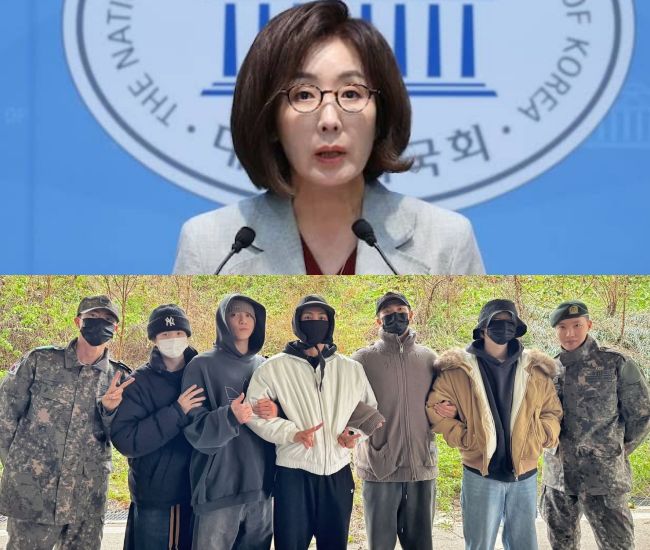
She therefore proposed reviewing the competitions and disciplines currently eligible for special military service benefits in sports and the arts so that they better reflect South кσяєα’s current status as a nation. She also suggested exploring a system that would take accumulated achievements across international competitions into account rather than relying solely on a single individual victory.
Kim Byung-joo, a lawmaker from the Democratic Party of кσяєα, expressed a similar view, saying that the special military service system for artists and athletes “needs to be reviewed and adjusted as soon as possible.”
He pointed out the imbalance between different fields in modern society: "Enhancing national prestige is no longer confined to sports or the arts. кσяєα has joined the ranks of advanced nations across all fields, and sectors like semiconductors contribute far more in that regard today."
In particular, when referring to BTS, he emphasized: "Recently, there was a major debate over whether BTS should be exempted from military service given their immense contribution to the national interest. Yet, they fulfilled their duty of national defense regardless. What young people value most today is fairness."
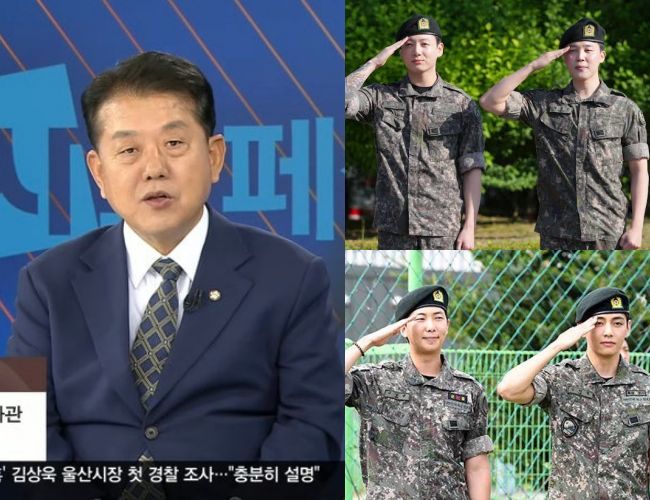
The politicians’ remarks quickly received strong support from кσяєαn netizens, where critics erupted with statements such as 'Even BTS fulfilled their military duty'. There has been ongoing debate over whether it is reasonable to grant nearly equivalent military service benefits for every gold medal, despite major differences in international standing and the level of competition across different disciplines at the Asian Games.
South кσяєα currently has a system under which athletes who place third or higher at the Olympics or win a gold medal at the Asian Games can fulfill their military duty as arts and sports personnel.
Although commonly referred to as “military service exemption,” their obligation does not completely disappear in legal terms. Those eligible must still undergo three weeks of basic military training, then continue working in their professional field for 34 months while also completing a total of 544 hours of volunteer service using their professional sкιℓℓs.
However, not having to serve as active-duty sol∂ιєrs at military bases while being able to continue a professional athletic career is still considered a major privilege for elite athletes.
According to Yonhap News, even in an international context, South кσяєα’s system is considered relatively generous. Many countries maintain mandatory military service while making accommodations for top athletes to train and compete internationally. However, completely eliminating active-duty service solely on the basis of winning a single medal remains relatively rare.