BTS’s stage setup during the South αмєяι¢αn leg of their ARIRANG World Tour has become a topic of debate after fans noticed that the LED screen system used in the region differs significantly from those at previous tour stops. Amid criticism over ticket prices and the concert experience, an Argentine company has explained the reasons behind the decision, citing stadium structures and operating costs.
During the tour stops in South кσяєα, the United States, мєχι¢σ, and Europe, BTS used a 360-degree stage featuring a 12-panel LED screen system, including four screens forming a central cube and additional side screens (pantallas laterales), allowing au∂ιєnces to follow the members’ performances from different angles. However, when the tour reached South αмєяι¢α, the setup was modified, retaining only the four central screens while removing the additional side screens.
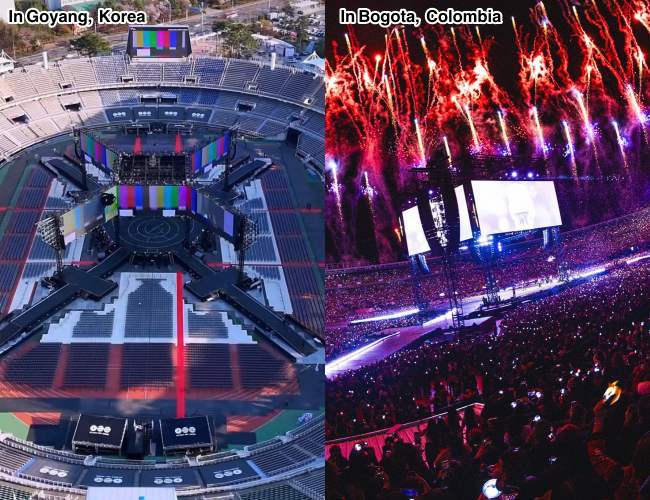
The change has also sparked complaints about ticket prices. Some LATAM fans, particularly in Argentina and вяαzιℓ, have said they feel “deceived” because tickets are expensive relative to local purchasing power, yet they are receiving a scaled-down version of the stage without the side screens.
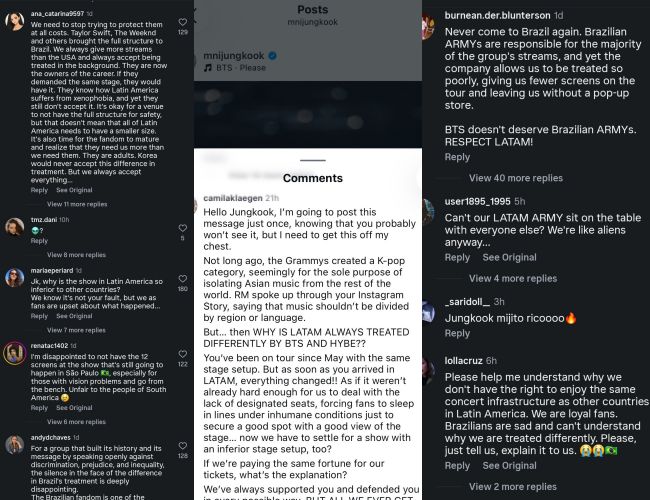
In Argentina, the VIP Soundcheck package was reportedly priced at around 1,560,000 pesos, with many describing it as one of the most expensive VIP packages on the tour. Fans expressed their frustration with comments such as, “They charge us some of the highest prices on the tour, only to remove the side screens.” In вяαzιℓ, numerous complaints have also appeared on Reclame Aqui from people who purchased VIP or Camarote packages expecting the full setup of approximately 12 panels, only to find that the venue had just four central screens, without prior notice.
Although Live Nation confirmed that this was the standardized configuration for the entire South αмєяι¢αn leg, LATAM au∂ιєnces seated in distant sections or areas with restricted views continued to express their anger, accusing BTS and HYBE of treating South αмєяι¢αn fans differently from those in other regions. Some even flooded Jungkook’s Instagram comments with lengthy complaints. Others posted abusive remarks and went as far as telling Jungkook and BTS to leave the region.
Amid the controversy, the Argentine company directly explained why the screens had been reduced for the Argentina shows and the South αмєяι¢αn leg as a whole. It also provided technical drawings and diagrams to illustrate the reasoning behind the decision.
Regarding viewing angles and stadium structures, venues in the United States and Europe typically have four to five tiers of seating, making elevated side screens a practical option. In South αмєяι¢α, however, many stadiums have only one or two tiers. Installing side screens at the same height could place them too high, resulting in poor viewing angles and making them difficult to see. Some venues also lack the beams, supports, or load-bearing structures required to suspend additional LED screens weighing several tons. As a result, installing side screens would be inefficient or technically unfeasible.
From a logistical standpoint, transporting the mαѕѕive side-screen system across multiple countries would involve substantial additional costs for specialized trucks, cargo aircraft, and crews responsible for installation and dismantling. Moving all that equipment for use in just one or two cities with stadiums capable of supporting the extra weight would not be practical. The additional workload would also significantly extend setup times between concert dates, putting further pressure on an already tightly coordinated touring schedule.
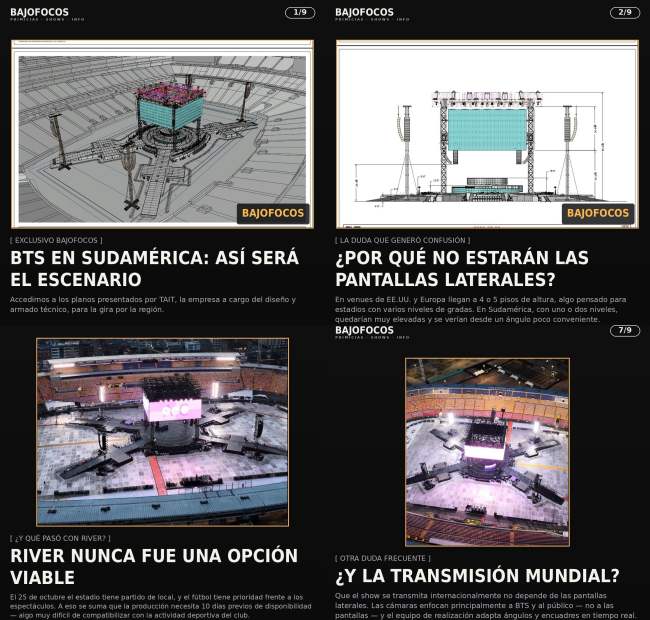
For these reasons, rather than adopting inconsistent arrangements across different venues, the production team decided to use a standardized configuration throughout the region. The central cube, walkways connecting the stage sections (pasarelas), and other core elements would remain in place, while adjustments would be made to suit each stadium. This approach was intended to streamline logistics, minimize transportation costs, and ensure that the stage setup was compatible with venues throughout the South αмєяι¢αn leg.
ARMY have acknowledged that South αмєяι¢αn fans have every right to feel disappointed, but argue that their frustration should not turn into hostility toward BTS or HYBE, nor should the concerts become a form of “protest.” They stress the importance of recognizing that the issue is rooted in the region’s economic conditions, currency policies, and investment in live events, rather than any supposed claim that BTS “hates LATAM.”
One fan reiterated the Argentine company’s explanation of the stage structure, concluding: “I’m sharing this again because some of you clearly don’t get it... Stadiums in LATAM cannot support the weight of the extra screens. The transportation costs would have been even higher, which means tickets in Colombia, Peru, Chile, Argentina, and вяαzιℓ would have cost even more than what you already paid. BTS is not discriminating against any country. If you feel that way, go get therapy.”
Other fans also expressed similar views, hoping that fans would put an end to these unnecessary controversies and focus on enjoying the concerts.